Sunday, September 5, 2010

Monday, August 30, 2010

THE BEYPORE LIGHTHOUSE

Our mission was to discover the Beypore lighthouse. So we set out on a nice bright day our hearts singing with joy and overflowing with enthusiasm. After an initial teeth rattling bone jarring ride in an ancient auto owned by a very friendly local named Moideen we arrived at Beypore port. Along the way we passed many local attractions including the Chaliyar River dotted with colorful steamers chugging quietly along, the Feroke Tile factory a place steeped in history and of some antiquity and an ancient mosque built along the lines of a Hindu temple, which in itself was rather unique.

Located some 15km from the heart of the bustling Calicut city centre, Beypore is a small sleepy port town with a single thoroughfare. Our auto plunged, twisted and turned through numerous country lanes scattered with brightly painted fishing cottages, where the shy fisher folk peered at us from their verandahs. After losing our way a couple of times and coming close to annihilating a couple of dimwitted squawking free range chickens, we finally ran down a person who could give us the accurate location of the lighthouse.

Standing proudly on a small strip of land that jutted dangerously out into the sea, we finally spotted the statuesque red and white beauty. Gulls and hawks wheeled and dipped around her with joyous abandon.

The lighthouse as such stood inside a massive gated compound dotted with coconut mango and areca nut trees. There were three small outhouses flanking the lighthouse. These housed the generator, the office and sleeping quarters of the lighthouse personnel.

A massive burgundy wooden door with brass handles opened onto a spiral stone staircase with polished teak railings. Small glass windows set high in the walls, gave us a panoramic view of the surrounding countryside which unfolded in all its wondrous green glory. A wraparound viewing deck at the very top of the lighthouse afforded us an unobstructed view of the sea and the far away fishing vessels and ships.

Built in 1977 the Beypore lighthouse stands tall at 32.41metres. The optical equipment supplied by J Stone and Co has 4 panels and can generate a powerful flash once every 15 seconds at a revolution speed of 2 R.P.M.

With the advent of new technology lighthouses are slowing being nudged into oblivion. One among a handful of still functioning lighthouses a visit to this landmark is a must for first time travelers to Calicut.

Thursday, August 12, 2010

A WALK IN THE HILLS


A lone eagle flew high overhead, wheeling, a black dot in the clear blue sky. The air was crisp and chill and we sat watching the wood smoke curling upwards from one of the hutments far below. Our vantage point was the Ganesh temple nestled in the hills high above the surrounding plains.

It was the month of August. There had been a small interlude between the torrential rains and we used this opportunity to explore the hills bordering our house. A short steep climb along the tarred road bought us to the foothills. From there a tiny path threaded its way through the dense foliage. Trees in a thousand shades of green blanketed the entire hillside. Pale sunlight filtered through the forest canopy taking on an ethereal greenish tinge. Suddenly a bird disturbed by our footfall exploded from the forest floor and flew upwards in a riot of colors. A koel hidden in one of the upper branches of a mango tree serenaded us with its sweet haunting cry. A tiny squirrel chattering happily skittered up a nearby neem tree.

As we trekked upwards we suddenly spied a tiny white edifice. A red flag on its tiled roof fluttered lazily in the breeze. Tucked away between tall trees it could easily be missed. We stood gazing at it for a long time.

A distant ominous rumble sent us scrambling for shelter. Pelting rain soon followed. Soaked to the skin we finally reached the white building which turned out to be a temple. For the next half hour the temple provided us refuge from the driving rain. Sitting on its broad, stone- flagged verandah we had a bird’s eye view of the surrounding countryside.

After about an hour the rain slowly died down. The sun came out in its entire golden splendor. The newly washed leaves glistened in the sunlight and the heady smell of wet earth filled us with a sense of well being. Reluctantly we decided to head home before the rain commenced.

Although we have visited the temple several times subsequently, we have never quite been able to recapture the magic of that first visit in the rain.

Sunday, July 4, 2010

BATTY ABOUT BATS


As dusk falls and bird calls die down, the air is rent with another kind of cry - shrill, high pitched and inaudible to the human ear. Slowly, shadowy forms rise into the night sky. With slow, languid movements of their massive leathery wings they fly in search of food.

The very word bat conjures up images of blood sucking, gruesome vampire like creatures. An image that has stuck in our minds thanks to lore and negative publicity given, to these mostly harmless creatures by the media.

Bats have roamed the earth since it’s nascent stage for nearly 55 million years. Not all bats can be classified as blood suckers (vampire bats). The vampire bats are found only in certain areas of Central and South America.

Their harmless cousins the fruits bats seen across the world, play a major role in sustaining our ecosystem. The fruit bats assist in cross pollination and seed dispersal (up to 60,000 seeds in one night) without which, our forests would become genetically weak, lack diversity in plant species, and would eventually die out. Fruit bats are also excellent controllers of moths and mosquitoes.

In urban areas, fruit bats can be found in tree hollows, roofs of houses, telephone poles, and hanging on to hi- tension wires.

The flying fox is a type of bat unique to the Australian continent. These particular bats use sight, and not smell to navigate. There are 7 types of flying foxes in Australia. The largest and most common among these are the Grey Headed Flying Fox (Pteropus poliocephalus). These are mostly found along Australia's east coast, from Rockhampton / Queensland in the North to Melbourne/ Victoria in the south.

Easily identifiable by their grey head (fox like and hence the name) and rusty brown fur around their neck, these bats are extremely mobile. They often fly over 50km in a single night in search of food. Camping out in eucalyptus trees, rainforests and mangroves, the flying foxes enjoy feeding on fruits, flowers, nectar and pollen from a wide variety of native trees like banksias, fig trees and tea-trees.

At around 3 years of age, flying foxes attain maturity. They have a gestational period of six months and give birth to a single baby during October/November. The youngsters are born fully furred and drink milk from their mothers teats located near her wing pits. The off spring is totally dependant on their mothers for about 4 to 5 months before they learn to forage independently.
One of the major threats facing flying foxes today is, loss of habitat and feeding areas. Often considered as pests by farmers they are subjected to wanton killing.

Harmless by nature bats play an important role in our eco diversity. So let us make an attempt to eradicate our long held prejudices against them.
Pictures Courtesy :gutenberg.org

batplants.co.uk

Thursday, July 1, 2010

A KALEIDOSCOPIC VIEW OF PUNE - PART 1


Early morning outside NIBM Institute


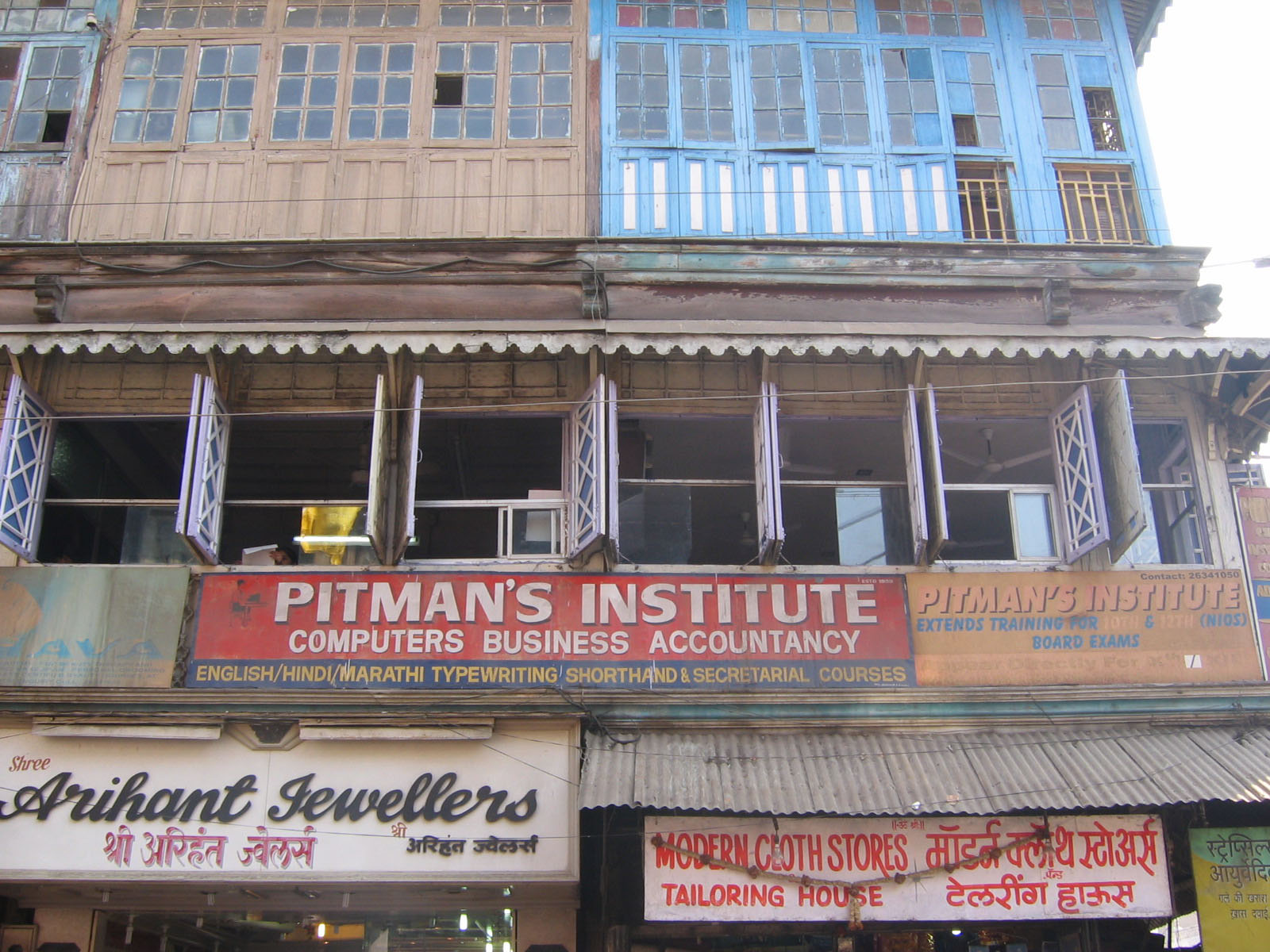
Pitman's Institute
Center Street


Shivaji Vegetable Market


HATHIMS


As the incense smoke curled and danced, and prayers spiraled upwards, time stood still inside the Babha-jan Dargah. Opposite the dargah was another slice of heaven in the form of a charming old bookshop called Hathims.

Hathims is a second hand book shop filled with books that are salvaged from its sister concern Mustafa Scrap Shop. Mohammed an effervescent 85 year old mans the bookshop.

Hanging out with its more admirable neighbors comprising cloth shops and jewellery stores Hathims is easily miss able except for one distinctive feature. Its cobalt blue wooden shutters, which stands in stark contrast to the surrounding cityscape.

Located in one of the numerous back lanes that dot Pune, Hathims is frequented by office goers stopping by to pick up an old issue of Readers Digest or Time magazine, school children browsing through Tinkle comics or knots of college girls giggling over a sizzling Mills and Boons book.

Every conceivable inch of the shop (that includes the floors) is crammed with books. On long white wooden shelves, which hug the walls, are arranged the novels. The hardbacks find pride of place in a small glass topped counter. An ante room adjoining the main shop is filled with magazines.

A rusted rickety chair, that doubles up as a footstool helps one to browse through the upper shelves. Although requiring the balance of a tight rope walker, you often came across a gem as you dangerously swayed on the chair.

All the while, like an absent minded professor, Mohammed flits around his shop, stopping only to give the books a quick dusting. Bent with age he is always willing to dazzle you with his friendly gap toothed smile which makes a trip to this humble bookshop all the more worthwhile.

Hathims is among the last few stalwarts of old Pune which soldier on, as the burgeoning city stamps out all things of its glorious past and reinvents itself as a glitzy new metropolis.

Sunday, June 27, 2010

DABKEH


Dabkeh is an energetic Middle Eastern folk dance performed during weddings and festive occasions. Performed to the accompaniment of the lute, Dabkeh in compliance with its Arabic meaning, involves a lot of feet stamping. A line dance, Dabkeh is extensively performed in Lebanon, Palestine, Jordan, and Syria and in sections of Egypt, Iraq, and Saudi Arabia.

The leader termed the ‘raas’( head) or ‘lawweeh’(waver) guides the other dancers. Twirling a handkerchief or a ‘mashba’ (type of rosary) he is given the unique privilege of improvising the dance. This vigorous dance form also involves a great deal of vocalization by the dancers.

Popularized in the 20th century throughout the Arab region, the birth of the dabkeh dance form can be traced back to Lebanon and Palestine. ‘Samaliyyah’, ‘Sarawiyyah’, Qurradiyyah are the most popular dabke forms. ‘Niswaniyyah’ is a unique form of dabke in that it is performed solely by women. The central theme of a dabkeh song is love and there are unique songs for specific dabke dances.

To learn more about this wonderful and distinctive dance form visit
http://www.youtube.com/watch?v=HYxQMbsmPaw

Saturday, June 26, 2010

FEERIE


I came across this perfume quite by chance while flipping through Hindu Newspaper's Sunday Magazine section. I was mesmerised by the sheer poetry of this beautiful perfume bottle. A rounded blue cut glass base with a silver fairy perched elegantly on top. It exuded magic and transported me to a world of dreams where fairies, butterflies and other wonderful creatures abound. It has floral undertones with a hint of Italian mandarin and black currant. This is another magical creation from the stables of Van Cleef and Arpels.
Photo Courtesy: myjane.ru